
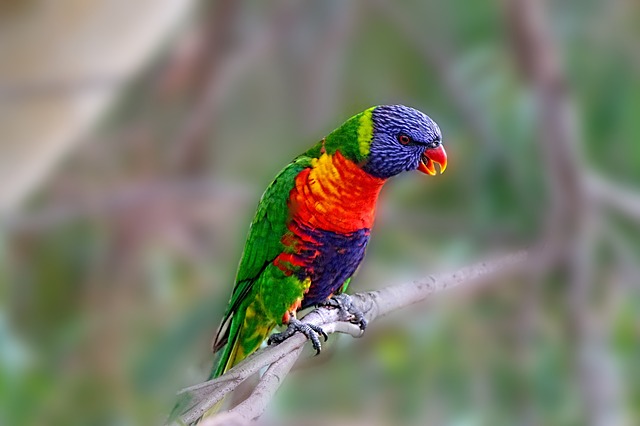
 There are probably over a hundred blogs on birds on the web. Some are broad in concept like mine, Ornithology.com , and the Cornell Lab of Ornithology. Others are limited to particular geographical areas and some have conservation goals as priorities. There are several whose goal is really advertisement.
My blog has its own niche. Rather than offering a long, detailed blog, mine is about 500 easily digestible words. My goal is to educate readers about the fascinating world of birds bit by bit. I have been studying birds for over 50 years, have given hundreds of talks and led hundreds of field trips, and I keep learning new things. Sometimes these facts have been known for awhile and I just recently discovered them and sometimes the facts themselves have been recently discovered. I do a lot of reading and of course communicate with other ornithologists.
Ornithology.com is a very popular website and comes up on Google #3 after Wikipedia and the Cornell Lab of Ornithology. You have the option to sign up up for my blog posts by clicking on the Subscribe button on the right.
What you will get from me are short but meaty pieces of ornithological information, sometimes lightweight but sometimes heavyweight, but mostly in between – something you will enjoy and learn from. And I welcome comments, questions, and general input. I will try to blog on a weekly basis so you always have something to look forward to. So I hope you will sign up. Meanwhile, let me know what areas of ornithology most interest you. Below is a list of the last 50 blogs. There are over 300 so there are plenty more for your reading pleasure. And as always, if you have questions, please contact me, The Ornithologist.
- Falconry
 Falconry—the art and practice of hunting wild quarry with trained birds of prey—is one of humanity’s oldest and most refined partnerships with the natural world. Its origins stretch back at least 4,000 years, with early evidence from Mesopotamia and Central Asia. Over time, it spread across Europe, the Middle East, and Asia, becoming both a… Read more: Falconry
 - eDNA
 For centuries ornithologists relied on binoculars, mist nets, banding stations, and direct observation to determine which bird species occupied a particular habitat. Today, however, an extraordinary new tool is transforming the field: environmental DNA, commonly called eDNA. This technique allows scientists to detect birds not by seeing or hearing them, but by identifying tiny fragments… Read more: eDNA
 - Birds in WarWar has shaped avian populations in ways that are both devastating and, at times, paradoxically beneficial. The immediate and most obvious effects are direct mortality and habitat destruction. Modern warfare brings aerial bombardment, artillery, and chemical contamination, all of which can kill birds outright or destroy nesting and foraging habitats. Wetlands are drained or polluted,… Read more: Birds in War
- Red HawksThe Red-tailed Hawk (along with the Cooper’s and Sharp-shinned Hawks) was once called a “Chicken Hawk,” and the Red-shouldered Hawk was known as the “Hen Hawk.” Undoubtedly, they took a few chickens—but only rarely. Like most stories of wild predators attacking domestic animals, their impact was greatly exaggerated. There’s one story about a farmer who… Read more: Red Hawks
- Birds of ChristmasNow that it is almost Christmas, you will hear the song “The Twelve Days of Christmas,” created in about 16th century England. This song has more birds in it than any other holiday song. You know, “On the first day of Christmas, my true love sent to me a partridge in a pear tree.” The… Read more: Birds of Christmas
- Why do Woodpeckers Peck?
 Woodpeckers are successful creatures and well-known to everyone. Perhaps the most famous woodpecker is Woody, the cartoon woodpecker, but the Ivory-billed Woodpecker, very likely extinct since 1948, is the most well-known real one. There are many kinds of woodpeckers in the world, around 250 species. Propped against the side of a tree trunk, they rapidly… Read more: Why do Woodpeckers Peck?
 - Flocks Heading South for the Winter
 This is the time of year you see flocks of birds heading south. If they are geese, they typically fly in a skein or V formation. Ducks fly in looser skeins, and smaller birds like shorebirds and songbirds fly basically in a bunch. Pelicans and cormorants fly in a line. And many blackbirds and starlings… Read more: Flocks Heading South for the Winter
 - Do Ducks’ Quacks Echo? And Other Bird Myths [Updated]
 I receive all kinds of questions from around the world, and I have been contacted by newspapers, magazines, radio and TV shows, Hollywood producers, authors, artists, scientists, architects, and even a fighter pilot in Iraq, asking about some aspect of birds. Mostly they are straightforward questions about identification, bird houses, feeding, behavior, diseases, etc., but… Read more: Do Ducks’ Quacks Echo? And Other Bird Myths [Updated]
 - Birds in Modern Life
 Birds have been around for over 200 million years. Of perhaps 125,000 avian species that existed during that time, over 11,000 still populate every habitat on Earth except the center of Antarctica and the depths of the oceans. Hominids have been around for maybe six million years, and modern humans only around 200,000 years. But… Read more: Birds in Modern Life
 - Nature Knows BestIn the northern hemisphere spring and summer are the times of the year birds are breeding – singing, courting, nesting, egg-laying, incubating, and feeding young. For most songbirds, incubation will last about 7-10 days and the young remain in the nest after hatching while the parents feed them. As the young grow, the nest eventually… Read more: Nature Knows Best
- The Evolution of Bird Color Guides and IdentificationWith its three-color receptors, the human eye can distinguish over a million colors. An LCD television can produce over one billion colors. And Sherwin Williams, a paint manufacturer, makes about 1700 colors. And someone has to name them. Until the 17th century, there was no word for the color orange, so orange-colored things were described… Read more: The Evolution of Bird Color Guides and Identification
- Bird Population and Feral Cats
 There are more than 90 million pet cats in the U.S. learn about their effect on the bird population.
 - Birds Named After PeopleIt is considered the height of arrogance, and now against the rules of nomenclature, for the discoverer of a species to name the organism after his or herself, but many species have been named in honor of others, such as Baird’s Sandpiper, Queen Anne’s Lace, and Bouganvilla. Spencer Fullerton Baird (1823 -1887) was an American naturalist, ornithologist, ichthyologist, herpetologist, and… Read more: Birds Named After People
- Bird NamesThere are a number of species of birds with widespread distributions such as the Peregrine Falcon, Mallard, and European Starling. Each has a designated scientific name, but all of the nearly 11,000 species of birds have an official common English name as well, as established by the International Ornithological Committee. So for every English-speaking country… Read more: Bird Names
- Cabinets of CuriositiesMuseums did not come about as we know them, places for education, study, and research, until the late 19th century. Before museums, wealthy individuals made their own collections, sometimes in the form of “cabinets of curiosities,” which came about in the sixteenth century. They were not actually cabinets but rooms with a plethora of natural… Read more: Cabinets of Curiosities
- Birds and the EclipseOn April 8, 2024, there was an eclipse. On average, there are total eclipses of the sun every 18 months, so every two or three years. In this century, there will be 224 eclipses, 68 of them in total. Some people are so fascinated by the phenomenon that they travel the world to see each… Read more: Birds and the Eclipse
- Mimics of the Bird WorldThere are lots of examples of birds looking like other things in order to avoid or frighten away predators. Many nightjars (Order Caprimulgiformes) look like leaf litter, bark or leaves. The Brown Creeper blends in with the tree trunks it climbs. The winter plumage Willow Ptarmigan is all white to blend into their snowy landscape.… Read more: Mimics of the Bird World
- AI and BirdwatchingThere’s a new development in AI and this one pertains to birds. Swarovski is coming out with Optik Ax Visio smart binoculars – the world’s first AI-supported binoculars that claim to help you identify 9000 species of birds as well as other animals. I haven’t used them so I can’t speak from personal experience and… Read more: AI and Birdwatching
- Avian CoprophagyThe strange title is simply a euphemism for “birds eating poop.” You are familiar with bird poop as that white stuff deposited on car side view mirrors, pool decks, and window ledges, but new research reported in the National Library of Medicine provides a different way to look at it. Just as in our gut,… Read more: Avian Coprophagy
- Intuitive BirdwatchingThroughout my biological education and career, identification “keys” were very handy. Called “dichotomous” keys because they typically branch in two, they look like an upside-down tree with many branches. Identifying bird specimens in the hand with a key is pretty simple. The first choice might ask whether the bill is straight or curved. If it… Read more: Intuitive Birdwatching
- Economic View of BirdwatchingThere’s a recent (Oct 2023) article in the journal Ornithological Applications entitled “Historical racial redlining and contemporary patterns of income inequality negatively affect birds, their habitat, and people in Los Angeles, California.” It’s rather complex but the basic idea is that well-to-do or even moderate-income neighborhoods have a greater diversity of birds than do low-income… Read more: Economic View of Birdwatching
- The Twelve-wired Bird-of-ParadiseRegularly I like to blog about some of the more interesting birds of the world. Today, one of the 45 species of Birds-of-Paradise. Birds-of-Paradise, family Paradisaedae, are only found in Indonesia, New Guinea, and a small part of Australia. In the early years of exploration, European Traders shipped Bird-of-Paradise skins from New Guinea to collectors… Read more: The Twelve-wired Bird-of-Paradise
- The Naming ControversyI earlier discussed the proposal by the American Ornithologist’s Union (AOU) to change the common names of birds named after people. Let me add a little more here. Will this lead to a change in scientific names as well? The AOU changed McCown’s Longspur to the Thick-billed Longspur because of McCown’s support of slavery as… Read more: The Naming Controversy
- The SnakebirdI like to alternate my posts between scientific and philosophical musings with looks at some interesting birds. Today the bird is the Anhinga. The word “anhinga” is derived from the native Brazilian Tupi-Guarani language word “ana’ĩnĩa,” which translates to “devil bird”, “snake bird” or “evil spirit of the woods.” The Tupi people (one of the… Read more: The Snakebird
- Bird Names Changing?From the Washington Post, November 1, 2023: “The American Ornithological Society (AOU) says it will alter the names of North American birds named after humans, starting with up to 80 of them.” Their justifications are that the names are of people with negative reputations – endorsing or participating in slavery, for example – and that… Read more: Bird Names Changing?
- Common Cuckoo“Cuckoo” has come to describe someone not fully in control of their mental state, but it has a number of other meanings that you can look up here. But today I’m going to give you the real scoop on the real cuckoo bird. The Common Cuckoo, Cuculus canorus. Cuckoo and cuculus both reflect the bird’s… Read more: Common Cuckoo
- Japanese “Nightingale”The English name “nightingale” refers to the Japanese Bush Warbler, a common songbird in Japan. The singing of the bush warbler has encouraged the keeping of these birds as caged birds in homes. To encourage singing the cages of birds were covered with a wooden box with a small paper window that allowed only subdued light… Read more: Japanese “Nightingale”
- Japanese Gardens and BirdsJust returned from a three-week trip to Japan. Not a birding trip but I snuck in some birdwatching when I could. Mostly visiting cities and towns and villages, I had a look at several parks and gardens. Japanese gardens are attractive, neat, and clean, but perhaps overly so. One of the elements of Japanese garden… Read more: <strong>Japanese Gardens and Birds</strong>
- A Little HiatusThis just a quick note to subscribers of Onithology.com blog posts. I will be out of the country for a few weeks and won’t be able to publish my blog until early October. If you miss reading my blog, I have written about 400 of them so you can read the ones you missed or… Read more: A Little Hiatus
- Migration Time, AgainFall is migration time in the Northern Hemisphere when birds leave their summer homes to winter at locations to the south; in the spring the migration is reversed, the birds moving from their summer homes to breeding locations in the north. But have you ever thought about the birds living in the Southern Hemisphere? Where… Read more: Migration Time, Again
- The SecretarybirdThe Secretarybird –Sagittarius serpentarius. The common name comes from the feathers of the head crest which resemble quill pens. Sagittarius, from the Latin, means “arrow or archer” and refers to the way an archer walked while stalking prey; serpentarius means “serpent handler” from the bird’s supposed affinity for snakes. They are endemic to Africa where… Read more: The Secretarybird
- Bird Bones as ToolsOne of the most notable characteristics of birds is their lightweight skeletal systems. Even though most bird bones are thin-walled and hollow relative to mammal bones, the wall of the bone itself is quite dense and the internal struts deter breaking. Some recent research tells us something that we had not known before: bigger birds… Read more: <strong>Bird Bones as Tools</strong>
- Laughing GullThe Laughing Gull, Leucophaeus atricilla. Gulls are not to be dismissed as just annoying picnic intruders. Some say they are actually “noble.” “Gull” from old Norse, means unhatched or new bird. Leucophaeus, from ancient Greek, means “dusky white.” From the Latin, atricilla means “black tail.” The adult Laughing Gull is easily identified by its contrasting… Read more: Laughing Gull
- Ruddy TurnstoneThis is the time of the year when shorebirds start making their way from their breeding grounds in the tundra to more southern climes. It’s an arduous journey to say the least. So today’s blog is about one of these birds, the very attractive Ruddy Turnstone. “Ruddy” refers to the reddish color on the back… Read more: Ruddy Turnstone
- Power Line FatalitiesData show that up to 65 million birds in the U.S. are killed by flying into powerlines, or perching on them and being electrocuted, each year. Worldwide, the mortality might be as high as 175 million birds. Some areas are installing powerlines with insulators so the birds do not make contact with power and putting… Read more: Power Line Fatalities
- Lear’s MacawI thought it would be nice to visit a bird that we don’t hear much about: Lear’s Macaw. Of 380 species of parrots worldwide, 19 are classified as macaws, a distinctive group of large, colorful birds. Inhabiting the tropical forests of South America, macaws differ from other parrots with their relatively larger beaks, long tails… Read more: Lear’s Macaw
- Names, Redux, AgainThere are all kinds of reasons for the common names birds have. They are named after people (Baird’s Sandpiper, for instance), places (Carolina Wren), physical description (Purple Finch), voice (Chachalaca), and behavior (dipper). Sometimes they are misleading, like the Red-bellied Woodpecker whose belly is really pinkish and the Ring-necked Duck whose ringed neck is very… Read more: Names, Redux, Again
- Nathan Leopold, Birdwatcher and MurdererYou might be familiar with one of the most famous murders of the 20th century, that committed by Richard Loeb and Nathan Leopold, teenagers who killed a 14 year old Bobby Franks in 1924 apparently for thrills, money, and the thought that they were smart enough to get away with it. They were intellectually astute… Read more: Nathan Leopold, Birdwatcher and Murderer
- Fancy ThatThe general assumption here is that the brightest, most active, aggressive, colorful males (and sometimes females) attract the best or most (for polygamous species) females, ensuring that their offspring have the best genes. It’s also reasoned that this is a tradeoff as the most obvious males would be most likely to attract predators and/or be… Read more: Fancy That
- The PelicansAs I drove home from a week at a lake, catching few fish, I saw a group of fish-eating birds circling overhead – pelicans. Were the Pelicans mocking me? Probably not, but I stopped to admire these large, seemingly ungainly waterbirds which are so adept at piscivory. Known for their unique long beaks and large… Read more: The Pelicans
- Adulterous BirdsI’ve been rereading Jared Diamond’s The Third Chimpanzee – humans. He spends a lot of time on various aspects of sex, one of which is extramarital sex. According to various human studies, somewhere between one and 30 percent of children are conceived as a result of extramarital sex, but the data are dubious because interviewees… Read more: Adulterous Birds
- Trusting ScienceA recent (June 16, 2023) article in the New York Times described the loss of trust in science, which is rather odd because during the pandemic the trust in science went up. What is science? It is the pursuit and application of knowledge and understanding of the natural and social world following a systematic methodology based… Read more: <strong>Trusting Science</strong>
- Uric Acid and the CloacaBirds have evolved a number of anatomical and physiological adaptations to reduce weight for flight – lightweight skeleton, fused bones, no teeth, no sweat glands, few scales, an aerodynamic body, and, in most cases, no urinary bladder. Mammals have a urinary bladder, used to eliminate the products of protein digestion. Water in the bladder dissolves… Read more: Uric Acid and the Cloaca
- The Rainbow DinosaurThere was an article in the New York Times recently about the evolution of birds, a field of knowledge that still has lots of mysteries. There are thousands of bird fossils, many of which have still to be fully examined and classified. But we are learning. One of the more interesting is Caihong juji, an… Read more: The Rainbow Dinosaur
- Singing CanariesI discussed The Canary Bird earlier; here’s a bit more. Years ago, singing canaries were popular. A radio show in the 1940’s in the U.S. featured dozens of canaries singing along with classical records. There was also a canary song training record from Hartz Mountain you could use at home to teach your canary to… Read more: Singing Canaries
- Avian VocalistsA recent article in the Washington Post, Why Birds and Their Songs are Good for our Mental Health, notes that “researchers found a significant positive association between seeing or hearing birds and improved mental well-being, even when accounting for other possible explanations such as education, occupation, or the presence of greenery and water, which have themselves… Read more: Avian Vocalists
- Sounds Like…..SOUNDS LIKE…… OK, what bird makes this call: honk, honk, tweeeeet, twitter twitter, buzzzzzz. Don’t know? That’s OK, neither do I. But I get questions like this on a regular basis from folks who want to know what bird they heard. Bird songs and calls may sound the same to different people but the descriptions… Read more: Sounds Like…..
- Sexual Preference in BirdsLGBTQ+ issues have been pretty common in the news lately, but humans are not the only animals that may fall into one of these categories. The Golden Fleece Award (1975–1988) was a tongue-in-cheek award given by Senator William Proxmire to public officials in the United States for squandering public money, its name taken from the actual… Read more: Sexual Preference in Birds
- Quantitative OrnithologyDuring each February the Great Backyard Bird Count occurs. Collectively, 7,538 species of birds – 2/3s of the known 10,960 species were found this year. More than 200 countries shared bird sightings. eBird is a global database of bird observations. It is an amazing tool for birders to keep track of their sightings, but it is also much more than… Read more: Quantitative Ornithology
- Rough-winged SwallowAn interesting bird name is “swallow.” In late Old English and Middle English it meant “gulf, abyss, hole in the earth, whirlpool,” also, in Middle English, “throat, gullet.” The name apparently stuck to the birds because of their dizzying, whirlpool-like flight, or their voracious eating habits. A In Ancient Greece, swallows were associated with Aphrodite.… Read more: Rough-winged Swallow