
Falconry—the art and practice of hunting wild quarry with trained birds of prey—is one of humanity’s oldest and most refined partnerships with the natural world. Its origins stretch back at least 4,000 years, with early evidence from Mesopotamia and Central Asia. Over time, it spread across Europe, the Middle East, and Asia, becoming both a practical hunting method and a symbol of status, particularly in medieval Europe and among nomadic cultures such as the Mongols.
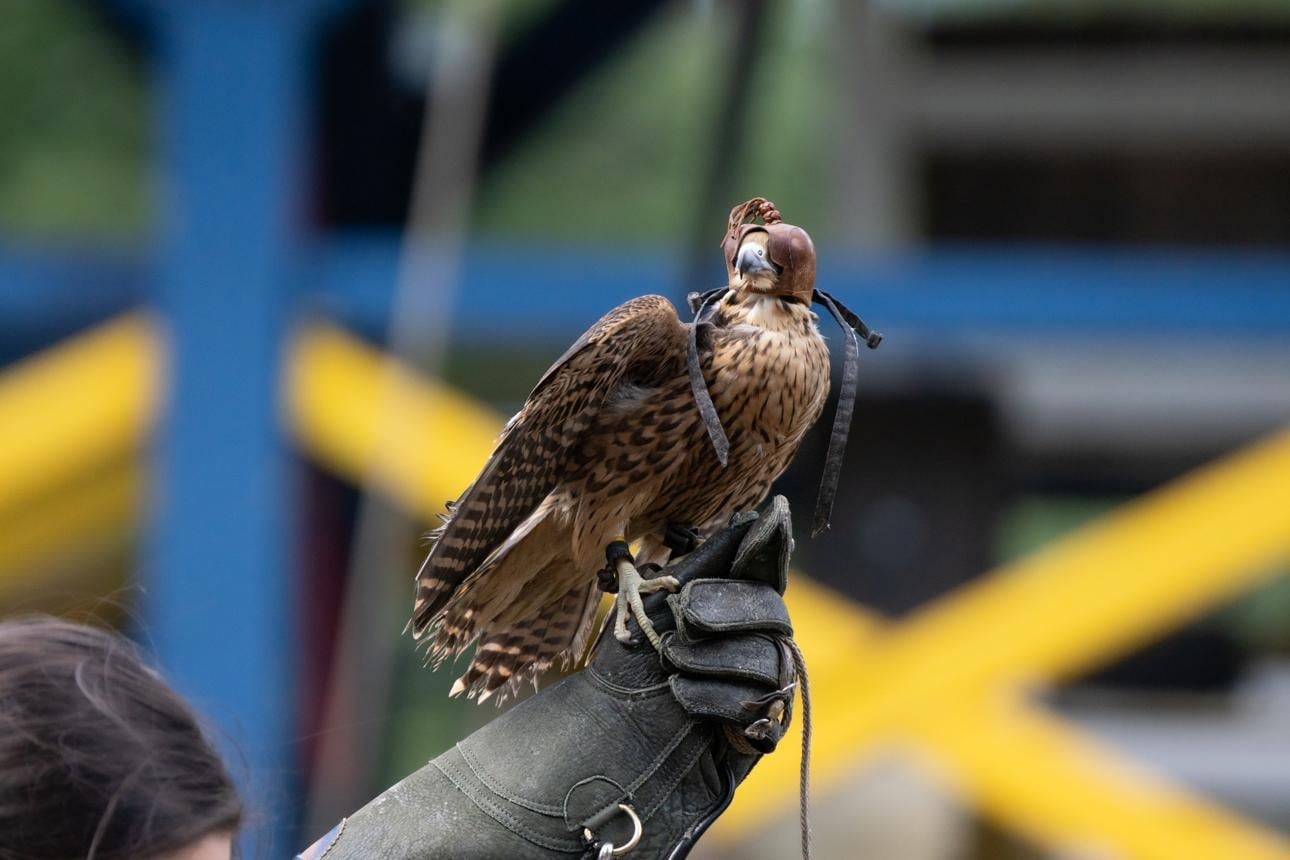
At its core, falconry is a highly specialized form of predation, in which humans and raptors cooperate to capture game. The birds most commonly used include falcons (such as the peregrine), hawks (like the Harris’s hawk), and occasionally eagles. Each species brings distinct hunting strategies rooted in their evolutionary biology. Falcons are aerial specialists, built for speed and open-sky pursuit; hawks, particularly accipiters, excel in maneuverability through dense vegetation. Eagles, used in some Central Asian traditions, are capable of taking larger prey such as foxes.
The relationship between falconer and bird is not one of domestication but of carefully managed trust. Raptors used in falconry are not genetically altered through selective breeding in the way dogs or livestock are. Instead, they retain their wild instincts and independence. Training involves conditioning rather than control: the bird learns to associate the falconer with food, returning voluntarily after a hunt. Equipment such as jesses (straps attached to the legs), a hood (to keep the bird calm), and a lure (used in training) are essential tools, but they function more as aids than restraints.
A central concept in falconry is weight management. The falconer must maintain the bird at an optimal flying weight—light enough to be motivated to hunt, yet healthy and strong. This delicate balance requires constant observation and adjustment, often daily. The falconer must also understand the bird’s behavior in detail: subtle shifts in posture, feather position, or response time can indicate changes in motivation or condition.
Falconry is also deeply embedded in ecological awareness. Successful hunting depends on knowledge of habitat, prey populations, weather, and seasonal changes. In this sense, falconers are field naturalists, attuned to the rhythms of the landscape. Historically, falconry contributed to our understanding of raptor biology and behavior long before formal ornithology emerged as a scientific discipline.
In modern times, falconry is regulated in many countries to ensure ethical treatment of birds and conservation of wild populations. In the United States, practitioners must be licensed and often apprentice under experienced falconers. Importantly, falconry has played a role in conservation, particularly in the recovery of species such as the peregrine falcon following declines due to pesticide use. Falconers were among the early advocates for captive breeding and reintroduction programs.
Today, falconry persists as both a cultural heritage and a living practice. In 2010, it was recognized by UNESCO as an Intangible Cultural Heritage of Humanity, reflecting its global significance and enduring traditions. While relatively few people practice falconry today, it continues to offer a unique window into the ancient bond between humans and birds of prey—one grounded not in domination, but in respect, skill, and a shared role in the hunt.