
For centuries ornithologists relied on binoculars, mist nets, banding stations, and direct observation to determine which bird species occupied a particular habitat. Today, however, an extraordinary new tool is transforming the field: environmental DNA, commonly called eDNA. This technique allows scientists to detect birds not by seeing or hearing them, but by identifying tiny fragments of genetic material left behind in water.
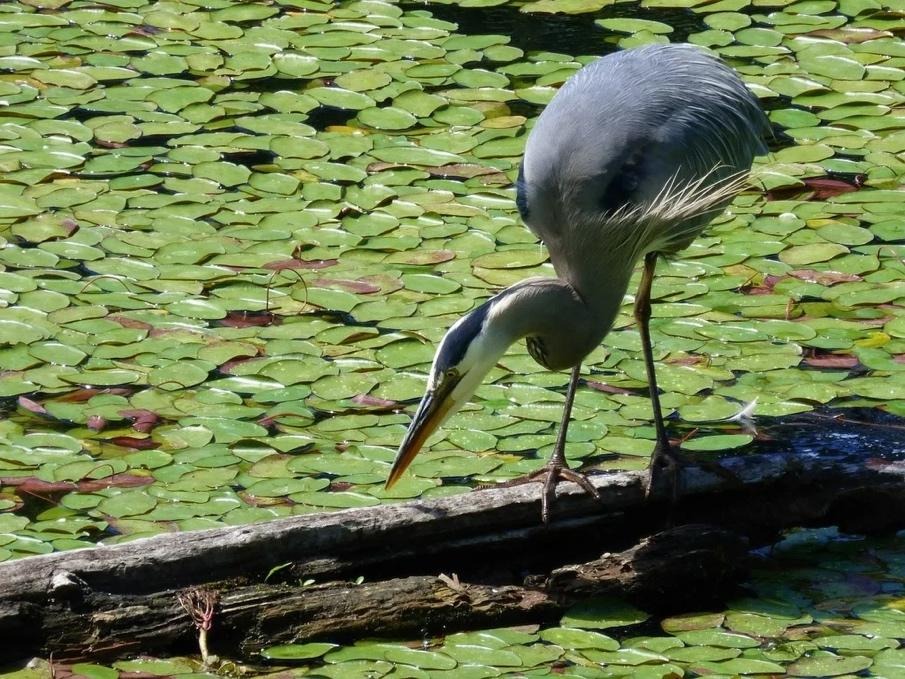
Every bird constantly sheds biological material into its environment. Feathers lose microscopic fragments, skin cells slough off, droppings dissolve, saliva enters water while drinking or bathing, and even decaying organic matter contributes traces of DNA. In wetlands, ponds, lakes, marshes, and streams, these fragments accumulate in the water. By collecting water samples and analyzing them in a laboratory, researchers can identify which bird species have recently visited the site.
The process begins with field sampling. Scientists may collect a liter or less of water from a marsh, vernal pool, or shoreline. The water is then filtered through extremely fine membranes that trap organic particles containing DNA. In the laboratory, technicians extract genetic material from the filter and use molecular techniques such as polymerase chain reaction (PCR) to amplify specific DNA sequences. These sequences are compared with large reference databases containing known bird genomes or “barcodes.” If the sequences match a species in the database, researchers can conclude that species was present in or near the water.
One remarkable aspect of eDNA is its sensitivity. Traditional bird surveys often miss elusive or nocturnal species. Rails hiding in dense cattails, secretive bitterns, or rare migratory shorebirds may escape visual detection. Yet if these birds wade, drink, bathe, or defecate in the water, their DNA may remain detectable for days or even weeks. Scientists have successfully identified species from water samples even when observers never saw the birds themselves.
This technology has especially important applications for conservation biology. Endangered species can be monitored with minimal disturbance. For example, instead of repeatedly entering fragile wetlands searching for a threatened bird, researchers can sample water from the habitat edge. The technique also helps track migratory stopover sites. During migration, birds may pause only briefly at isolated wetlands. Water samples taken during migration seasons can reveal which species used the habitat, even if the birds departed before surveys occurred.
Environmental DNA can also uncover unexpected biodiversity. In some studies, water samples have revealed the presence of species not previously recorded in the area. This is particularly useful in remote habitats where field observations are difficult. Arctic ponds, tropical mangroves, and dense forest wetlands may all yield genetic evidence of visiting birds that human observers would rarely encounter.
The method is not without limitations. DNA degrades over time, especially in warm temperatures or under intense ultraviolet light. Moving water can transport genetic material downstream, complicating interpretation of exactly where a bird was located. Contamination is another concern; a stray feather from a researcher’s clothing or residue from earlier samples can create false positives if strict laboratory procedures are not followed.
Another challenge involves abundance estimates. Detecting DNA usually confirms presence, but not necessarily population size. A large amount of DNA does not always mean many birds were present. A single goose lingering for several days may leave more DNA than a flock of small sandpipers stopping briefly. Consequently, eDNA is often most effective when combined with traditional survey methods rather than replacing them entirely.
Nevertheless, the implications are profound. Environmental DNA is expanding ornithology into a new era where even invisible traces of life become scientifically meaningful. A quiet pond may appear empty to the eye, yet its water can contain genetic signatures from ducks, herons, swallows, rails, and migratory songbirds that visited recently under cover of darkness or during brief stopovers.
In many ways, eDNA turns water into a biological archive. Each droplet may preserve fleeting evidence of avian visitors, allowing scientists to reconstruct patterns of habitat use, migration, and biodiversity with unprecedented precision. As genetic databases improve and sequencing costs continue to decline, environmental DNA is likely to become one of the most powerful tools ever developed for studying birds and the ecosystems upon which they depend.